
The theme of the Caux Forum 2019 was ‘Trustbuilding: a forgotten factor in today’s divided world?’ Its five conferences drew politicians, experts, activists and young people from all over world to discuss such issues as trust in the digital age, the relationship between peace and the environment, just governance, inclusive peace and tools for changemakers.
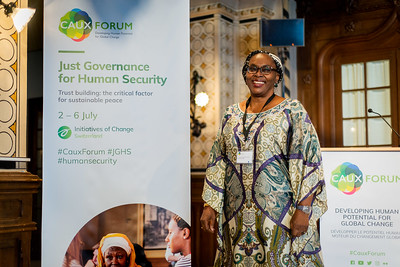
Among the speakers were Conrad Sangma, Chief Minister of Meghalaya, the first state in India to draft a comprehensive state water policy, and Bogdan Klich, Leader of the Opposition in the Polish Senate, who highlighted the ways that nationalism and social exclusion are eroding democracy.
The Forum saw the launch of the first Summer Academy on Land, Security and Climate, one of several programmes for younger people which ran parallel to the main conferences. These included Learning to be a Peacemaker, at which young Muslims and non-Muslims from across Europe explored Islam’s teaching on peace. ‘We were taught to work for the societies we live in to become more inclusive, understanding and tolerant,’ said Maryam Shah, a law student from the UK.
This was the fifth year that young Turks and Armenians met at Caux to search for ways of building bridges between their communities, divided since 1.5 million Armenians died under the Ottoman Empire during World War I. ‘For us, Turks were always the enemy,’ said Arshalouys Tenbelian, an Armenian ‘fourth-generation genocide survivor’ from Lebanon. At Caux she had discovered that ‘if I can learn to hate, I can learn to unhate’. Kurds have now joined the dialogue.